

Tattooing looks like “just drawing,” but in practice it’s a mix of art, minor wound management, and live problem‑solving—on a surface that changes minute to minute. Here are the biggest challenges tattoo artists commonly deal with while actively tattooing.
Skin Is Unpredictable (And Changes During the Session)
Skin isn’t paper. It varies widely by person and body area, and it also changes when it becomes irritated.
Common issues:
- Different skin types: oily, dry, thin, thick, sun‑damaged, very stretchy, very firm, etc.
- Texture and conditions: scars, stretch marks, eczema/psoriasis areas, acne, enlarged pores, etc. (many artists avoid actively inflamed skin).
- Swelling and redness: the skin can “puff up” and distort lines, making it harder to see saturation.
- Ink takes differently: some skin “rejects” ink more, some saturates quickly, some gets chewed up easily.
Why it’s challenging: The artist is constantly adjusting hand speed, needle depth, voltage, stretch, and technique to match what the skin is doing at that moment.
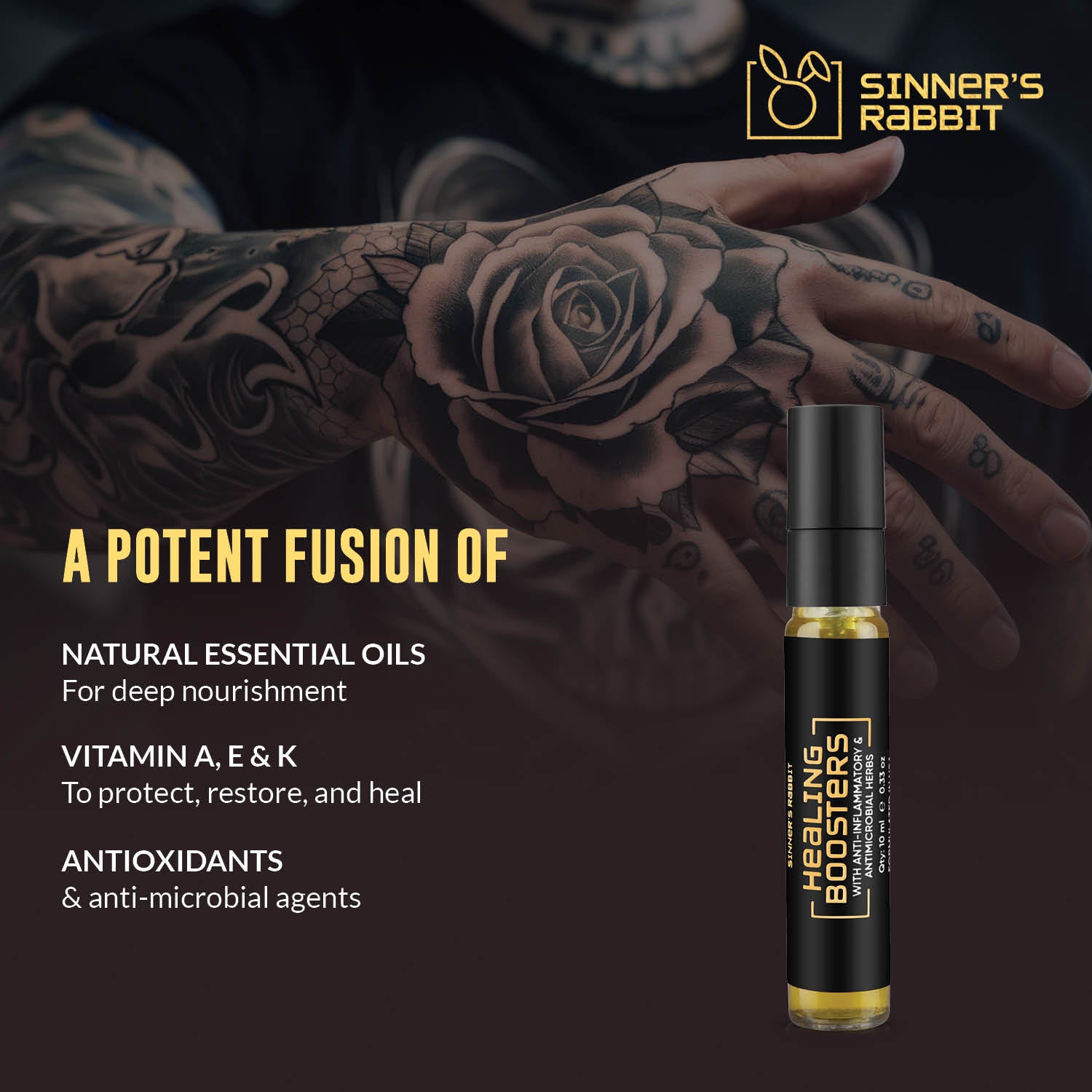
Sinners Rabbit: Skin prep products like Tattoo Healing booster (Apply three times a day for 4 Days before getting a tattoo ) can prepare the skin for a tattoo artist. It will help the art and the artist both.
Controlling Depth and Avoiding Blowouts:
One of the most technical challenges is putting ink in the correct layer of skin consistently.
- Too shallow: patchy lines, poor saturation, and ink falls out during healing.
- Too deep: “blowouts” (ink spreads under the skin), excessive trauma, and heavier scarring risk.
Depth control is harder on:
- Thin/fragile areas (inner bicep, ribs, hands/feet, neck, etc.)
- Very soft or stretchy skin
- Areas with lots of movement (joints)
Best Falcon Tattoo Cartridges are designed to help artists maintain precise depth control across all skin types. Crafted with perfectly tapered, ultra-sharp pins and an elastomeric silicone membrane, the cartridges provide smooth, consistent needle movement that adapts naturally to the body’s contours.

The Falcon Needles medical-grade plastic housing holds more ink for steady flow, while the 100% leak-proof safety membrane prevents ink backflow into the machine. With automatically soldered pins available in 46 precise configurations and pre-sterilized, disposable packaging, Falcon Tattoo Cartridges help reduce trauma, improve saturation, and deliver cleaner, more controlled lines with less discomfort for the client.
Read Also: Why Falcon Tattoo Cartridges Are the Best Choice for Modern Tattoo Artists
Placement on Curved, Moving Anatomy
Bodies aren’t flat, and they don’t stay still.
Challenges include:
- Curves and perspective: designs can look different when the client stands, sits, or twists.
- Skin stretch direction: pulling the skin changes how lines land.
- Body movement: breathing on ribs/chest/abdomen; reflex flinches; muscle twitching.
Artists often have to “think in 3D” and anticipate how the tattoo will look in normal posture—not just on the table.
Tattooing on curved, moving anatomy requires constant angle adjustments and steady control. The Utopian Nexa wireless tattoo machine is built to support this challenge with a lightweight, well-balanced ergonomic design that allows artists to work comfortably from any angle without straining the hand or wrist. Its smooth, low-vibration performance helps maintain line consistency even on areas affected by breathing, muscle movement, or skin stretch.

With super-fast USB-C charging, a powerful single-cell battery, and flexible wireless or RCA operation, Nexa adapts seamlessly to different working positions and session lengths. Quick voltage presets and a clear smart display give artists precise control in real time—helping them think and work in 3D, maintain accuracy on curved surfaces, and achieve consistent results in natural body posture.
Client Movement, Pain Tolerance, and Involuntary Reactions
Even cooperative clients move a little.
Common in-the-moment problems:
- Flinching or tensing during painful sections.
- Micro-movement from talking, laughing, looking at the tattoo, checking phones, etc.
- Breaks vs. momentum: too many breaks can increase swelling and make it harder to continue cleanly, but pushing too long can be unsafe/unpleasant.
A big skill is pacing: keeping the client comfortable enough to stay still without dragging the session so long that the skin gets overly angry.
The Elevate Rookie Tattoo Chair Bed (Model: 11654314) is designed to support proper pacing by maximizing client comfort and stability. Its high-capacity hydraulic pump, full 360° rotation, and multi-angle adjustable seat, backrest, and arm support allow artists to position clients precisely without frequent repositioning. The 115mm thick high-density, ultra-soft foam, contoured seating, and ergonomic headrest help reduce pain-induced tension, while the 90° rotational legrest adapts easily to different tattoo areas.

Built with a stainless steel base, silent smooth castors, and a 200kg weight capacity, the chair remains stable throughout long sessions. When clients are relaxed and well-supported, involuntary movement is minimized—allowing artists to maintain rhythm, reduce skin stress, and work with greater focus and control.
Bleeding, Plasma (weeping), and Visibility
Some people bleed more than others, and some areas bleed more.
This creates challenges like:
- Needing to wipe frequently, which can irritate skin and blur a stencil.
- Plasma and ink pooling make it harder to see crisp line placement.
- Ink dilution on the skin surface—what looks solid while wet may heal lighter.
Sinners Rabbit Soothing Clove Soap helps control these challenges by calming the skin as you work. Powered by Eugenol from clove oil, it delivers natural analgesic and anti-inflammatory benefits that reduce redness, swelling, and irritation. Its balanced-pH, professional formula deeply cleans excess ink and plasma without harshness, while antibacterial properties help maintain a hygienic surface. The non-sticky, non-foaming, stencil-safe consistency ensures clear visibility throughout the session.

Paired with Falcon Lint-Free Tissue Paper, artists can wipe efficiently without damaging the skin. High absorbency removes ink and plasma quickly, while the soft, durable, lint-free texture prevents irritation and needle interference—helping artists maintain clean visibility, protect the skin, and achieve more predictable healed results.

Stencil problems and keeping the design “locked.”
Stencil transfer can be surprisingly fragile.
During tattooing, artists fight:
- Stencil rubbing off from wiping, sweating, friction, or improper drying time.
- Smudging or drifting on tricky spots (bony areas, very curved areas).
- Alignment issues if the client shifts posture after placement.
Many artists work in an order (key lines first) that protects the roadmap before it fades.
Tattoo Gizmo Thermal Transfer Stencil Paper is designed to help artists overcome these issues with long-lasting, high-definition transfers. Engineered for smooth, accurate application, it delivers crisp stencil lines that resist smudging and fading during tattooing.
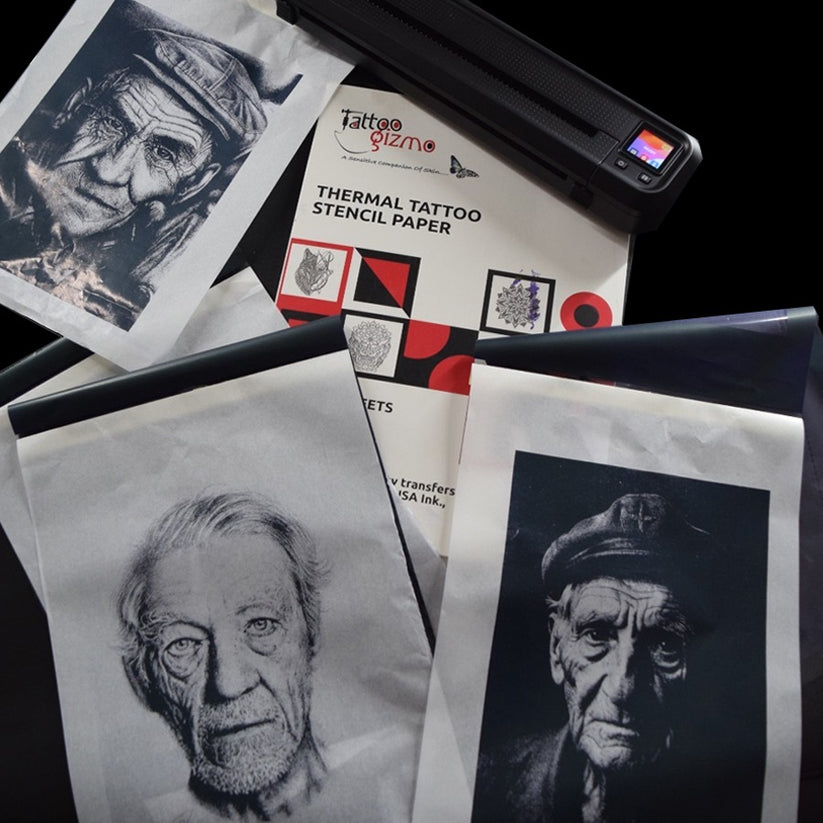
The high-visibility purple dye ensures clear readability even after multiple wipes, while the eco-friendly, vegan, and cruelty-free formulation keeps it safe for both skin and studio use. With reliable adhesion and consistent performance across all body areas, this A4-size stencil paper helps artists keep designs aligned, visible, and locked in from the first line to the final pass.
Stretching Skin Correctly—Especially in Awkward Spots
Good tattooing requires a consistent stretch.
Hard areas:
- Ribs, stomach, inner arm, elbow ditch, armpit edge
- Hands/fingers (lots of movement, variable thickness)
- Knees/ankles (tight + curved + moving)
Poor stretch can cause:
- Wobbly lines
- Uneven saturation
- Increased trauma from repeated passes
After all this trauma, the Sinners Rabbit healing booster can help the skin to repair fast and naturally.
Color Packing and Smooth Shading Without Overworking
Making it look smooth” is tougher than it seems.
Common challenges:
- Getting even saturation without tearing up the skin.
- Smooth gradients that don’t band or heal patchily.
- Light colors (yellows/whites/pastels) can be harder to read while working and can require careful layering.
- Dark-to-light transitions can look perfect wet and still heal differently.
Achieving smooth color packing and flawless shading requires inks that perform consistently without overworking the skin. Uneven saturation, patchy healing, and banding in gradients often come from pigments that don’t flow or settle evenly—especially when working with light tones or delicate transitions.
Eternal Tattoo Inks and Sinister range of Tattoo Inks and Colors by Sinners Rabbit are formulated for professional control, offering high pigment load, smooth consistency, and easy skin penetration. Developed by industry veterans and produced under strict batch-to-batch standards, these inks deliver predictable saturation, stable blends, and reliable healing—helping artists achieve clean gradients, vibrant color packing, and long-lasting results with reduced skin trauma.

Time Management vs. Skin Limits
Even if the artist could keep going, the skin might not cooperate.
- Overworking increases swelling/trauma → worse healing → touch‑ups needed.
- There’s a constant decision: push for completion vs. stop at a clean stopping point and finish later.
This is especially true for large pieces, cover-ups, and high-detail realism.
Fixing or Tattooing Over “Problem History” (Scars, Cover-Ups, Old Ink)
Cover-ups and reworks create real-time challenges:
- Old ink can show through, especially dark colors.
- Scar tissue can take ink unevenly.
- The artist may need to redesign on the fly if the old tattoo behaves differently than expected.
Hygiene, Contamination Control, and Staying Sterile While Multitasking
This is a huge challenge during the act of tattooing because it’s easy to accidentally cross-contaminate.
Artists must constantly manage:
- Glove changes at the right times
- Not touching “dirty” surfaces (phones, chairs, lights) with contaminated gloves
- Clean handling of rinse cups, ink caps, machines, cords, bottles, etc.
- Disposal of sharps and contaminated waste properly
Maintaining strict hygiene during tattooing is challenging, especially when artists are constantly switching between tools, surfaces, and tasks. Frequent glove changes, handling machines and supplies, and avoiding contact with contaminated surfaces are all critical to preventing cross-contamination.

Tattoo Gizmo 100% Nitrile Gloves (5 Micron, Textured Fingers) are designed to support safe, efficient multitasking. Made from a durable nitrile blend, these powder-free gloves offer high puncture resistance while remaining thin enough for precision work. The automatically shaped design ensures a comfortable fit, while the anti-slip textured fingertips provide reliable grip in both wet and dry conditions—helping artists maintain control, hygiene, and confidence throughout the session.